



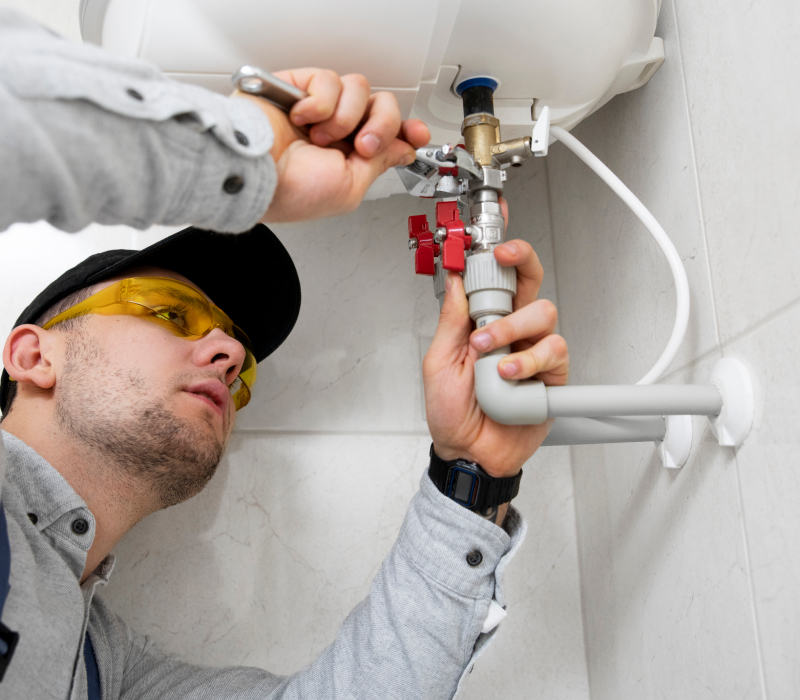
Your shower turns lukewarm in half the time it used to, the tank is not leaking anywhere, and the burner still fires normally. In that specific situation we are usually looking at a water heater dip tube problem, and the tube is a length of plastic pipe inside the tank that nobody thinks about until it cracks.
When that component fails, cold water stops going where it belongs and heads straight toward your shower head instead. Here is how the part works, how it breaks down, and what St. George homeowners typically notice first.
What the Water Heater Dip Tube Does
Cold water enters the tank through an inlet on top, and hot water leaves through an outlet positioned a few inches away, also on top. If both connections simply dumped into the same space, incoming cold would mix into the outlet immediately and you would never receive a full tank of genuinely hot water.
The water heater dip tube prevents that, because it is a plastic tube fitted under the cold inlet that carries incoming water down to the bottom of the tank, below the hot layer. Hot water is less dense so it floats, which leaves the cold water sitting down at the burner or the lower element until it heats and rises in turn. That layering, called stratification, is what allows a forty gallon tank to deliver close to forty gallons of hot water.
Most tubes also include a small anti-siphon hole near the top. If the house loses pressure, that hole breaks the siphon so the tank cannot drain backward into the cold supply line.
How a Water Heater Dip Tube Fails
The tube spends its entire service life submerged in hot, mineral-rich, constantly moving water, and three things go wrong.
- It cracks or snaps near the top: the tube hangs from the inlet fitting and constant thermal cycling works on that joint, and a break up high is the worst case because incoming cold then enters immediately beside the hot outlet.
- It shortens or curls: heat softens the plastic over time and the lower end deforms or breaks off, which leaves the tube delivering cold water into the middle of the tank rather than the bottom.
- It disintegrates: certain plastics break down into flakes and pellets that wash straight out into the household piping.
Once the tube is shortened or broken, the tank continues heating normally, but your hot water is being diluted at the point of exit. The measure of the problem is therefore not how hot the tank becomes, it is how quickly incoming cold water reaches the outlet.
Hard Water Makes It Worse
Mineral-heavy water throughout Washington County coats the tube in scale and adds abrasion every single time the tank refills. Scale also builds a thicker sediment bed across the bottom, so a tube that has broken off short may discharge directly into loose grit and stir it back into suspension.
The U.S. Geological Survey explains how mineral hardness is measured, and the EPA drinking water program covers where those dissolved minerals originate.
Signs of a Failing Water Heater Dip Tube
- Hot water turning lukewarm considerably sooner than it used to, with no change in household habits.
- Water that never reaches the temperature it once did, even at an identical thermostat setting.
- Small white or grey plastic flakes appearing in faucet aerators, shower heads, or washing machine screens.
- Sudden temperature swings at the shower whenever another fixture opens somewhere in the house.
- Weak flow at one particular fixture because the aerator screen has packed itself with debris.
The plastic flakes are the real giveaway, because sediment is gritty and grey while dip tube debris is light, flat, and tends to float.
A St. George Scenario You May Recognize
Picture a homeowner in Washington with two teenagers, one bathroom, and a second morning shower that has been running cold for a month. The tank is twelve years old and the thermostat reads correctly when tested.
Pull the aerator off the kitchen faucet and the screen is packed solid with soft white flakes. Short hot water combined with plastic in the screens indicates a water heater dip tube that has broken down internally. From there, a technician weighs two questions: whether the tank is otherwise sound enough to justify a new tube, and whether debris has already migrated into the mixing valves in the showers.
Water Heater Dip Tube or Something Else?
Several different failures feel completely identical from inside the shower, so we separate them by behavior instead.
- Dip tube: plenty of hot water on the first draw followed by a rapid fade, plastic flakes in the aerators, and a tank temperature that tests normal.
- Sediment buildup: popping or rumbling during heating, gritty grey material at the drain, and slow recovery after a shower.
- Failed lower element on an electric unit: a small volume of genuinely hot water followed by nothing, with no noise and no debris, and our electric water heater page covers that failure.
- Gas control or thermostat drift: water that never reaches the expected temperature at all, rather than fading partway through a shower.
- Crossed hot and cold connection: this frequently appears right after remodeling, when a new fixture allows cold water to feed backward into the hot line.
We confirm a dip tube diagnosis by pulling the inlet nipple and examining whatever remains of the tube itself.
Repair the Tube or Replace the Tank?
Swapping the tube is straightforward work on a structurally sound tank: shut off water and fuel, drain down, remove the cold inlet nipple, extract the old tube, and fit a replacement. The decision, however, usually has nothing to do with the tube.
- On a younger tank with a healthy anode rod and a clear drain valve, replacing the water heater dip tube makes obvious sense.
- On an older tank with a thick sediment bed, a spent anode rod, or corrosion at the fittings, a broken tube is simply one symptom of general age.
That judgment is exactly what we walk homeowners through during water heater service visits.
Safety Notes Before You Open the Tank
- Turn off the gas control or the breaker first and allow the tank to cool completely, because the water inside will scald you.
- Close the cold supply valve and relieve pressure by opening a hot tap before breaking any connection on the tank.
- Never plug or cap the temperature and pressure relief valve to stop a drip while you work, because that valve is the tank’s safety device.
- Flush debris out of aerators and shower heads afterward instead of allowing it to migrate into valve cartridges throughout the house.
- If you smell gas at any point during the work, leave the house and call the utility from outside.
When to Call a Professional
Call when you find plastic in the aerators, when hot water fades quickly on a tank that used to perform normally, or when temperature swings appear at several fixtures simultaneously. Call immediately for a gas smell, scorching near the draft hood, or water pooling underneath the tank.
Once a repair involves opening a pressurized water heater, it is work for a professional, and the Plumbing-Heating-Cooling Contractors Association represents the licensed trades that do it.
Frequently Asked Questions
Can a broken dip tube make my water heater leak?
Not directly, because a water heater dip tube sits inside the tank and holds no pressure, so a crack in it cannot create a leak. What it creates instead is lukewarm water and a supply of plastic debris.
Are the white flakes in my faucet dangerous?
They represent a nuisance rather than a hazard, though they clog aerators, screens, and shower valves throughout the house. Clear them out and have the source identified before they reach the mixing valves.
Do all water heaters have a dip tube?
Every storage tank unit does, gas and electric alike. Tankless models contain no water heater dip tube, because they heat water as it moves through a heat exchanger instead of storing it.
Will turning up the thermostat fix it?
It will not, and it raises scald risk for everyone in the household. A broken tube dilutes hot water at the outlet, so a hotter tank fades just as quickly while making every tap in the house more dangerous.
Get the Tube Checked
If your hot water fades fast and you are finding plastic flakes in the aerators, do not replace the entire unit before somebody looks inside it. Call St George Water Heaters or send the details through our contact page, including the age of the tank and where you found the debris.
We will pull the inlet fitting, inspect the water heater dip tube, and tell you whether a new tube or a new unit is the honest answer.