



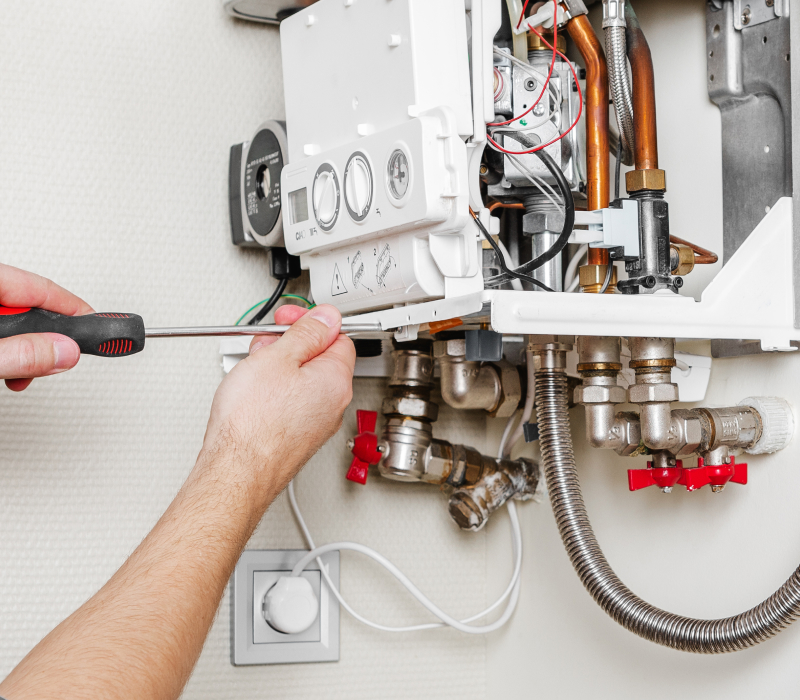
A hot water recirculation pump exists to solve exactly one annoyance, which is standing at the far bathroom sink while cold water pours out of the hot tap. When the loop is working correctly, hot water is already waiting a few feet from the fixture.
When it fails, homeowners get a collection of symptoms that rarely look like a pump problem at all, including warm water coming out of the cold side. Here is how a recirculation loop actually moves water, the three components that fail, and how we determine which one is responsible for what you are seeing.
How a Hot Water Recirculation Pump and Loop Work
Hot water sitting still inside a pipe gradually cools, and the longer the run from the heater to the fixture, the more cold water has to be pushed out before hot water finally arrives. A recirculation system keeps that water moving so it never sits long enough to cool down.
There are two common layouts in residential construction.
- Dedicated return line: a separate small pipe runs from the farthest fixture back to the water heater, so the hot water recirculation pump pushes water out the hot line, around the loop, and back into the tank through a return connection, which is the layout usually installed while the house is being built.
- Crossover valve system: no return pipe exists, so a thermostatic crossover valve is installed under the farthest sink, bridging the hot line to the cold line, and cooled water in the hot line passes through that valve into the cold line and back to the heater until the valve closes once the water reaching it is hot.
Both designs need one additional part, which is a check valve that permits flow in only one direction, because without it the water takes the easy path and mixes where it should not.
The Three Parts That Fail
The Hot Water Recirculation Pump
A hot water recirculation pump is a small circulator built with a wet rotor, which means the moving parts sit directly in the water. Hard water throughout Washington County deposits scale on that rotor and its bearing surfaces, so drag increases as the scale builds and eventually the rotor seizes entirely.
At that point you hear a hum with no flow, or nothing at all. Running a pump dry after the system has been drained destroys the bearings in exactly the same way.
The Check Valve
This is the failure we chase most often, because scale or debris prevents the check valve from seating and hot water then travels backward through the loop into the cold line. The result is a cold tap that runs warm, sometimes briefly and sometimes all day long, which homeowners usually report as a plumbing mystery rather than a recirculation complaint.
The Control
Pumps run on a timer, an aquastat that senses pipe temperature, a button or motion trigger at the fixture, or some combination of those. When a timer loses its schedule or an aquastat drifts out of calibration, the pump either runs constantly or never runs at all, and constant operation is not harmless, because it keeps water moving through the tank around the clock, which speeds scale formation and consumes the anode rod faster.
Symptoms and What They Point To
- A long wait at the far fixture again: the pump is not running, has seized, or the control has failed.
- Warm water from the cold tap: a failed check valve, or a crossover valve that is stuck open.
- The pump hums but the pipes stay cold: a seized rotor or an air-locked loop.
- Hot water arrives fine but the tank cycles constantly: the loop is running nonstop with poor pipe insulation.
- Ticking or knocking inside the walls: pipe expansion from continuous circulation against a tight strap.
- Scale and anode wear ahead of schedule: a sign the loop is circulating far more than the household actually needs.
A St. George Scenario You May Recognize
Picture a family in a newer St. George subdivision. The cold water at the kitchen sink is lukewarm all afternoon, while the guest bath now takes as long for hot water as it did before the loop was ever installed. There is a crossover valve under the far sink and a hot water recirculation pump mounted at the tank.
A likely finding is a check valve fouled with scale, so hot water is short-circuiting into the cold line instead of traveling around the loop. The lukewarm cold tap and the return of the long wait are one single failure observed from two different fixtures. Replacing the check valve and descaling the pump would address both.
Dedicated Loop, Crossover Valve, or On-Demand Control
If you are weighing a system for your own home, these layouts behave differently from day to day.
- Dedicated return line: the strongest performance available, with no warm water in the cold line by design, though it requires the return pipe, which is why it is normally a new-construction decision.
- Crossover valve: works without a return pipe, which makes it the realistic retrofit for an existing house, and the tradeoff is a cold line that warms slightly during circulation.
- Continuous or timer operation: simple and predictable, but the hot water recirculation pump circulates whether anyone needs hot water or not, which drives heat loss and tank wear.
- On-demand control: a button or motion sensor runs the pump only when somebody is about to use hot water, which means less circulation and less wear, though a short wait still remains.
The EPA WaterSense program explains why water wasted waiting at a tap matters in a desert climate, and ENERGY STAR publishes home efficiency guidance covering hot water distribution.
What a Loop Does to Your Water Heater
This part gets overlooked regularly, because a recirculation loop means water passes through your tank far more often than it does in a house without one.
- More circulation means more mineral precipitation, so sediment and scale build up faster.
- Constant movement past the anode rod increases how quickly that rod is consumed.
- The burner or the elements cycle more often to hold temperature against loop heat loss.
None of that argues against having a loop, but it does argue for insulating the piping, controlling the pump sensibly, and keeping up with tank maintenance. Our water heater service page covers the maintenance side of that.
Safety Notes
- Recirculation pumps run on household voltage in a wet location, so shut off power at the breaker before servicing one.
- Never remove a check valve in order to solve a flow problem, because it is what keeps hot and cold water separated.
- Do not raise the tank setting above the label temperature to make up for loop heat loss, because that raises scald risk at every fixture in the house.
- Do not energize a pump while the loop is drained, since dry running ruins the bearings quickly.
- Support and insulate the loop piping properly, because unsupported hot pipe moving inside a stud bay is where knocking noises begin.
When to Call a Professional
Call when the cold tap runs warm, when the hot water recirculation pump is silent or humming without moving water, when the long wait returns after years of normal operation, or when you are considering a loop for an existing home. Call sooner if you see moisture at the pump flanges, because a leaking circulator sits directly above electrical connections.
We install recirculation systems alongside tank work, our plumbing services page covers the rest, and the EPA WaterSense program covers ways to waste less water at the tap.
Frequently Asked Questions
Why is warm water coming from my cold tap?
In a home with a recirculation loop, that symptom almost always means a check valve or a crossover valve is not closing. Hot water crosses into the cold line instead of returning to the heater the way the design intends.
Does a hot water recirculation pump wear out the water heater?
It does make the tank work harder, because water circulates continuously and heat is lost along the piping. Insulated pipes and demand-based control reduce that effect a great deal.
Can a pump be added to an existing house?
Usually it can, using a crossover valve under the farthest fixture instead of a dedicated return line. The evaluation looks at pipe routing, fixture layout, and where power is available near the tank.
How long should I wait for hot water with a working loop?
Much less time than without one, though the delay depends on pipe length and whether the pump runs continuously or on demand. A loop that suddenly takes as long as it used to is a failure signal rather than a change in habits.
Get the Loop Tested
If your cold tap is running warm or your hot water wait has returned, the loop is telling you which component gave out. Call St George Water Heaters or send the details through our contact page, including where the lukewarm water appears and whether you can hear the pump running.
We will test the hot water recirculation pump, check the check valve and any crossover valve, and confirm that the loop moves water the way it was designed to.