



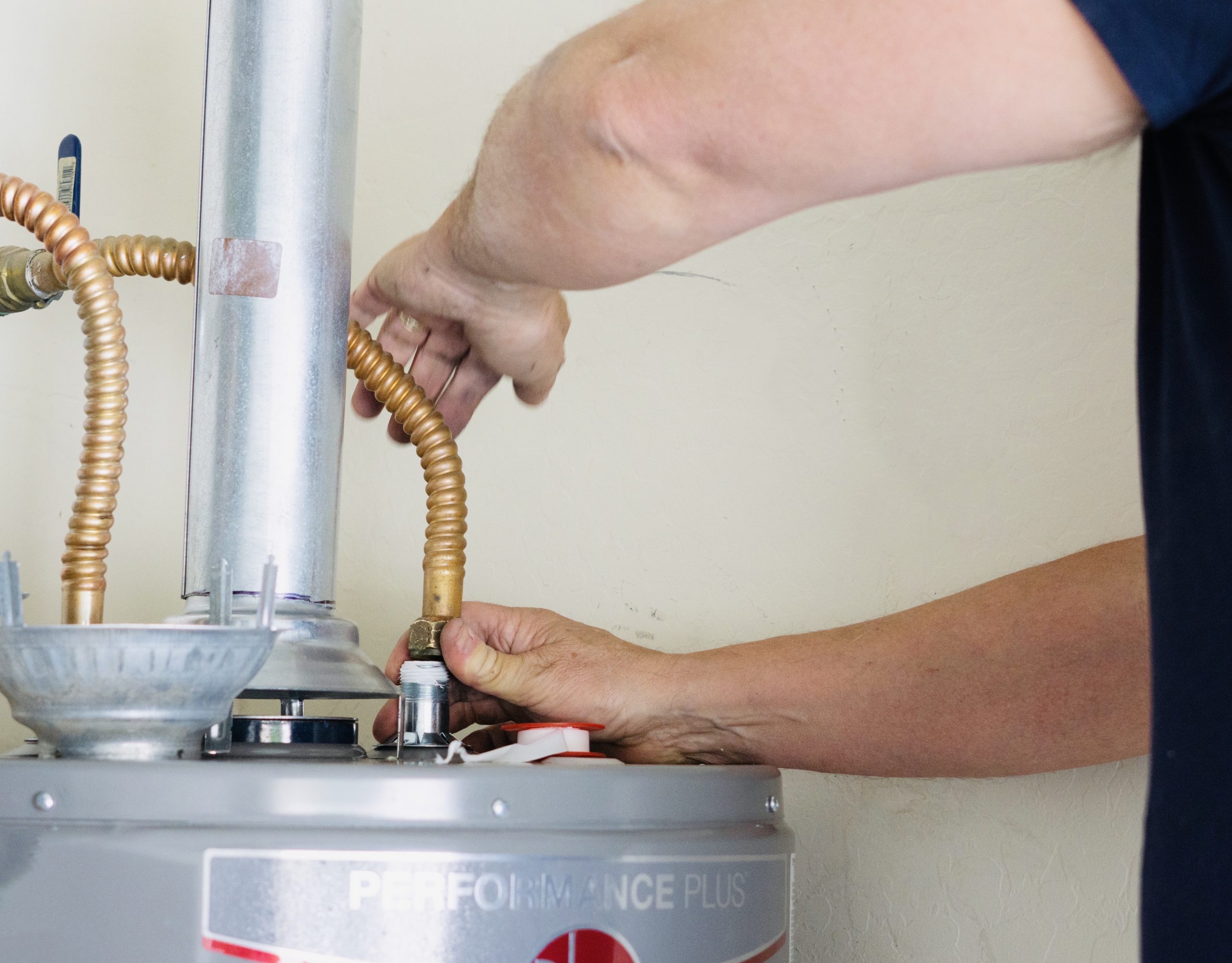
Of everything that goes wrong with a storage tank, a failing gas water heater vent is the one that can genuinely hurt somebody. Burning natural gas produces carbon monoxide, water vapor, and heat, and every bit of that is supposed to leave the house through the flue, so when the draft reverses those gases spill into the room instead.
This article explains why draft works at all, what makes a gas water heater vent stop pulling in St. George homes, and the physical evidence that tells us exhaust has been coming back inside.
How a Gas Water Heater Vent Moves Exhaust
Most standard gas tank heaters are natural draft appliances, which means there is no fan anywhere in the system and the entire process runs on buoyancy.
Hot combustion gas is lighter than the cooler air surrounding it, so it rises, leaving the burner chamber, passing up the center flue inside the tank, exiting through the draft hood on top, and traveling up the vent connector into the chimney or vent stack. The draft hood is the open collar above the tank, and it performs two jobs at once, because it lets the flue pull extra room air to stabilize the flow and it gives excess pressure somewhere to spill whenever the vent cannot keep up.
Three factors determine whether that rising column keeps moving.
- Temperature difference: hotter exhaust measured against cooler outside air produces considerably stronger lift.
- Vent height and slope: taller vertical runs pull harder, while long horizontal sections without upward slope destroy draft.
- Makeup air: air leaving through the flue has to be replaced from somewhere, so a sealed room effectively starves the flue.
Take away any one of those three and the gas water heater vent stops pulling reliably.
Why Backdrafting Happens
The House Pulls Harder Than the Flue
This is one of the most common causes, and it starts with bathroom fans, range hoods, clothes dryers, and air handlers, all of which push air out of the house. In a tight home that lowers indoor pressure, and when the pressure drop exceeds the weak buoyancy of a natural draft flue, air reverses and comes down the vent carrying exhaust back into the room. Homeowners typically notice a warm, damp smell near the laundry room whenever the kitchen hood runs on high.
The Vent Is Blocked or Disconnected
Bird and rodent nests in vent caps, rust flakes collecting at an elbow, a crushed connector behind stored boxes, or a section that has simply come apart at a joint will each throttle the exhaust path. The EPA indoor air quality program covers how combustion appliances affect the air inside a home.
The Flue Is Oversized After a Furnace Upgrade
This particular scenario catches a great many St. George homeowners by surprise, because older homes frequently ran the furnace and the water heater into one shared chimney. When the furnace is later replaced with a sealed high-efficiency unit that vents out a sidewall, the water heater is left alone on a flue sized for two appliances, a situation technicians describe as an orphaned water heater.
A single small burner cannot warm that oversized chimney, so the exhaust cools, condenses, and never develops enough lift. The result is a chronically weak gas water heater vent that spills under completely ordinary conditions.
Bad Geometry
Too many elbows, an excessively long horizontal run, insufficient rise per foot, or a connector that slopes downhill will all undermine draft. Code requirements for vent sizing and slope exist for exactly this reason, and those standards are maintained by organizations including IAPMO.
Physical Signs We Look For
- Rust streaks or flaking on the vent connector, particularly near the draft hood.
- Soot accumulating at the draft hood or around the burner access panel.
- Melted or warped plastic on nearby items, or a scorched jacket near the top of the tank.
- Water droplets on the vent pipe or a damp ring on the floor beneath it.
- Moisture condensing on windows near the appliance whenever it fires.
- A carbon monoxide alarm that sounds intermittently, especially while exhaust fans are running.
Those marks accumulate across months rather than days, so they tell us backdrafting has been happening for a long while.
A St. George Scenario You May Recognize
A homeowner in a 1990s neighborhood replaced the furnace two winters ago with a high-efficiency model vented through the side wall, and nobody touched the water heater at the time. This summer they notice rust powder on top of the tank and a faint smell whenever the dryer runs.
The tank is now orphaned on a tall masonry chimney originally built for two appliances, so its exhaust cools before reaching the top, condenses on the cold flue liner, and that moisture rusts the connector from the inside out. The gas water heater vent never gets hot enough to establish draft, and every time the dryer pulls air out of the house the flow simply reverses.
Atmospheric, Power Vent, Direct Vent, and Tankless
When venting itself is the problem, the repair sometimes means changing how the appliance vents altogether.
- Atmospheric or natural draft: relies entirely on buoyancy and room air, which makes it the simplest design and the most sensitive to house pressure.
- Power vent: a blower pushes exhaust through the vent, so draft no longer depends on chimney conditions, though it needs an electrical outlet nearby.
- Direct vent: draws combustion air from outdoors through a sealed pipe and exhausts outdoors as well, so house pressure has very little effect on it.
- Tankless: sealed combustion with a dedicated vent, which takes an old shared chimney out of the picture entirely, and our tankless water heater page covers what installation involves.
Which of those fits a particular home depends on the vent path available, the gas supply, and where the unit sits, which makes it a site evaluation rather than a catalog choice.
Safety Notes
- Install carbon monoxide alarms and keep them current, because the U.S. Consumer Product Safety Commission publishes guidance on placement and replacement intervals.
- If an alarm sounds, get everyone outside first and then call 911 or the fire department from outside the house, and Ready.gov covers those steps.
- Headache, dizziness, and nausea that improve once you leave the house should be treated as a possible exposure, so seek medical care and let professionals evaluate it rather than deciding on your own.
- Never operate an appliance you believe is backdrafting, but shut the gas control off and call for service.
- Never store boxes, chemicals, or laundry against the tank or against the vent connector.
- Do not cover, tape, or restrict the draft hood opening, because it is part of the safety design.
When to Call a Professional
Call when you see rust or soot at the draft hood, when a carbon monoxide alarm activates, when the vent pipe sweats, or when symptoms line up with running a fan or a dryer. Call immediately if you smell exhaust near the unit.
A technician can perform a spillage test at the draft hood, with the house fans running, to determine whether the flue holds draft under realistic conditions, and that test is part of the inspection described on our gas water heater page.
Frequently Asked Questions
Can I test for backdrafting myself?
A rough check is holding a smoking match near the edge of the draft hood a minute after the burner fires and watching which way the smoke travels. That remains a screening step only, because a proper test runs the exhaust fans first, since that is when a gas water heater vent is most likely to reverse.
Does hot weather make backdrafting worse?
It certainly can, because draft depends on the temperature difference between exhaust and outdoor air, so very hot days weaken the pull, particularly on a long or oversized flue.
Is a rusty vent connector a real problem?
It is, because rust means moisture has been condensing inside the pipe, which points toward exhaust that is either too cool or moving too slowly. Sections that have rusted through will leak exhaust directly into the room.
My water heater was fine until we replaced the furnace. Why now?
Because it may have been orphaned on a flue originally sized for two appliances, and that single change can convert a working vent into one that never establishes draft at all.
Schedule a Vent Inspection
If you have seen rust at the draft hood, a carbon monoxide alarm go off, or exhaust smells whenever fans run, treat the situation as urgent. Call St George Water Heaters or reach us through our contact page and describe what you have noticed and when it happens.
We will inspect the gas water heater vent from the draft hood through to the termination, run a spillage test with the house fans operating, and lay out the repair or venting change that resolves it.