



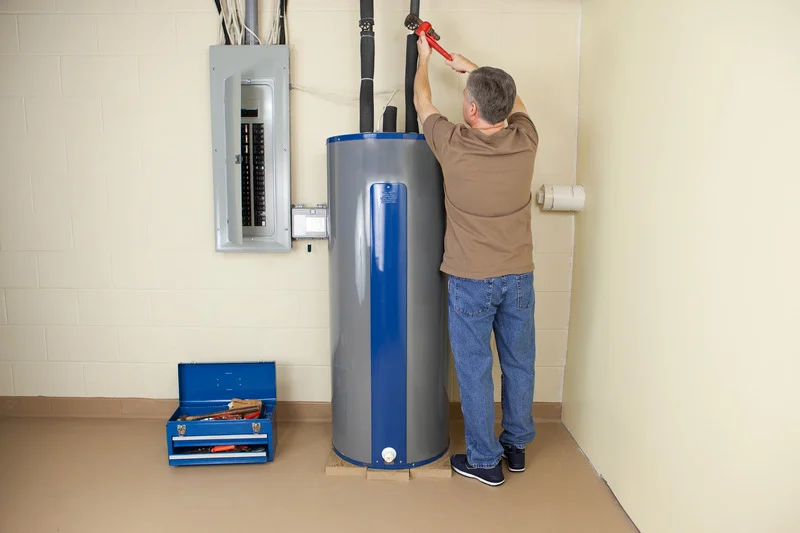
Most tanks do not fail because a component breaks, they fail because the steel rusts through from the inside, and the only thing standing between your tank and that rust is a water heater anode rod. In St. George, where the water is hard and heavily mineralized, that rod gets consumed considerably faster than most homeowners expect.
Here is the electrochemistry that eats the rod, what happens to the tank once the rod is gone, and how our technicians evaluate its condition instead of guessing at it.
What the Water Heater Anode Rod Actually Does
A water heater anode rod is a long metal rod, usually magnesium or aluminum formed around a steel core, that threads into the top of the tank and hangs nearly to the bottom of the vessel. Technicians describe it as sacrificial because it was engineered to be destroyed.
Inside your tank you have steel, water, and dissolved minerals, and that combination functions as a battery. Electrons migrate from the more reactive metal toward the less reactive one and the reactive metal dissolves, so because magnesium and aluminum are both more reactive than steel, the current attacks the rod rather than the tank wall. Every gram lost from the rod represents a gram of steel that remained intact.
The tank also carries a glass lining fired onto the steel, but that lining always contains pinholes and chips from the manufacturing process. The rod covers those gaps electrically, which means that once the rod is consumed, exposed steel becomes the only remaining material for the water to corrode.
Why the Rod Wears Out Faster Here
Three conditions accelerate the reaction, and homes throughout Washington County tend to have all three of them at once.
- High mineral content: dissolved calcium, magnesium, and sulfate make water considerably more conductive, which increases the current flowing between the rod and the tank, and the U.S. Geological Survey explains how that mineral load is measured.
- High tank temperature: corrosion chemistry runs faster in hot water than in cold, so a tank operating above the temperature printed on its own label burns through a rod sooner.
- Softened water: softening exchanges hardness minerals for sodium and the resulting water is more conductive still, which is why homes on a softener often consume a water heater anode rod noticeably faster.
Hot summers introduce one additional complication. Incoming water arriving at the tank is already warm, so the burner cycles less frequently and the tank spends more hours sitting hot and idle, which is precisely when the corrosion reaction runs unopposed.
What a Spent Water Heater Anode Rod Looks Like
When we pull a rod out of a St. George tank, we are reading three separate indicators.
- Diameter: a new rod is a solid cylinder, a worn rod is thin and pitted, and late in its life it resembles a wire with irregular lumps clinging to it.
- Exposed core: once you can see the steel core wire along long stretches of the rod, it has stopped protecting anything inside the tank.
- Coating: a rod encased in hard white scale is insulated from the water and cannot pass current at all, even when plenty of metal remains underneath.
A rod that comes out looking like a chewed pencil did exactly the job it was designed to do. The problem is what happens afterward, because the tank has no protection whatsoever from the day that rod is exhausted until somebody installs a replacement.
A Scenario You May Recognize
A family near Washington calls because their hot water smells faintly of rotten eggs and runs rusty for the first several seconds at the tap. The unit is eight years old and has never been serviced by anyone.
That sulfur odor comes from sulfate-reducing bacteria feeding on hydrogen released by a magnesium rod, which tells us the rod is still chemically active, while the rusty first draw tells us bare steel is already exposed somewhere inside. Two clues collected during one visit point toward the same conclusion, which is that the water heater anode rod is near the end of its working life and the tank has begun corroding wherever the rod can no longer reach.
Magnesium, Aluminum, and Powered Rods Compared
There is no universally correct answer here, so it helps to understand how the three types differ from one another.
- Magnesium: the most reactive option, so it protects most aggressively and wears out fastest, and it is also the type most frequently associated with rotten egg odor in water carrying sulfate-reducing bacteria.
- Aluminum and aluminum-zinc: less reactive, which means it survives longer in hard water and tends to reduce odor complaints, though the protection it provides is weaker than magnesium.
- Powered or impressed-current rods: these use a small electrical supply rather than sacrificing metal, so nothing is consumed, but they require power at the tank and do not fit every model.
Confirm what your manufacturer permits before switching the type of water heater anode rod installed in your tank. Bradford White and other makers publish that information by model number, and an unapproved rod can affect warranty coverage.
Can You Check the Rod Yourself?
You can, provided you go in with realistic expectations about the work involved.
- The rod threads into the top of the tank, frequently hidden beneath a plastic cap and insulation, and the hex head is usually torqued down hard at the factory.
- The tank has to be depressurized and partially drained beforehand, otherwise the rod comes loose into a scalding geyser.
- Plenty of St. George garages provide less headroom above the tank than the rod is long, which means installing a flexible segmented rod on reassembly.
If that sounds like a rough Saturday afternoon, rod inspection is a routine part of a maintenance visit, and our water heater services page describes everything we examine.
Safety Notes
- Shut off the gas control or the breaker and allow the tank to cool before opening anything, because tank water will scald you badly.
- Never cap or block the temperature and pressure relief valve while you work, since that valve provides the tank’s only protection against pressure.
- Do not overtighten a new rod into a glass-lined tank, because cracking the lining at the port defeats the entire purpose of the repair.
- Leave the thermostat at the setting printed on the unit’s label.
When to Call a Professional
Have the rod inspected if your tank is several years old and has never been checked, if the hot water smells sulfurous, or if the first draw at a hot tap runs rusty while the cold side stays clear. Call sooner if you notice weeping at the seams or rust streaks running down the jacket, because both symptoms point toward a tank that is already leaking. We service tanks across St. George and Washington, and homeowners on the east side can start at our Washington water heater page.
Frequently Asked Questions
How long does a water heater anode rod last?
The answer depends on water chemistry, tank temperature, and how much hot water the household actually draws. Rather than guessing from a calendar, pull the rod and examine it, because the condition of the metal is the only genuinely reliable answer.
Will a new rod save a tank that already leaks?
It will not, because once water is escaping through the steel the tank is finished. A rod protects sound steel from corroding further, but it cannot rebuild a wall that has already rusted through.
Does a water softener change which rod I should use?
Frequently it does, because softened water is more conductive and can consume magnesium quickly, which is why aluminum-zinc and powered rods come up in those conversations. Confirm what your manufacturer permits for your specific model before changing anything.
Do tankless units have anode rods?
Most of them do not, because there is no large steel tank requiring protection. The EPA drinking water program remains a useful primer on the water chemistry that still drives scale inside a tankless heat exchanger.
Book a Water Heater Anode Rod Inspection
If you do not know whether your tank has ever had its rod checked, that uncertainty alone is reason enough to look. Call St George Water Heaters or reach us through our contact page with the age and brand of your unit.
A technician will pull and inspect the water heater anode rod, check the tank for early corrosion, and show you exactly what came out so that you can judge its condition yourself.