



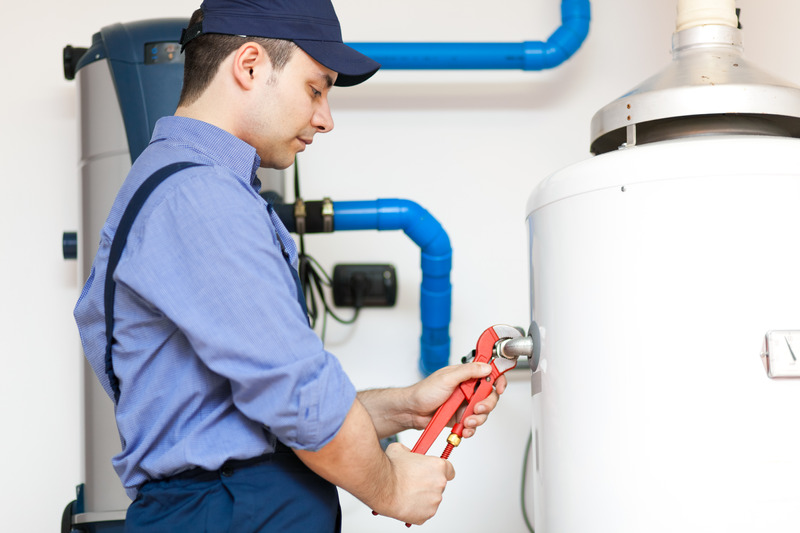
Seeing water near a water heater in a St. George home deserves a calm, safety-first response. Water in that area can have more than one possible source, and a general article cannot identify the cause or tell you which repair is needed. The priority is avoiding unsafe contact with hot surfaces, electrical equipment, fuel connections, or pressurized components while documenting only what can be observed safely.
Do not open the water heater, remove a panel, drain the tank, alter a valve, perform electrical or gas work, or attempt to trace water behind equipment. A drain pan may limit some damage when it is part of an installation, but it does not diagnose or repair active water. The right next step depends on the actual system, location, plumbing, and current conditions.
Check for immediate hazards first
If water is near electrical equipment, smoke or a burning smell is present, there is a gas odor, the water is spreading quickly, or the area cannot be approached safely, step away. Do not take a close photo, move the unit, or reach through water to find a control. Use appropriate emergency or professional help.
The Consumer Product Safety Commission's electrical safety guidance supports a basic rule: do not mix close inspection with wet electrical conditions. It is not a diagnostic resource for a particular water heater. If the concern may involve equipment or conditions you cannot safely access, saying that clearly is better than trying to complete a checklist.
For a non-urgent concern in a dry accessible area, stay on a clear path and observe from a distance. Keep children and pets away from the equipment area. Your task is to preserve the facts, not to determine where the water began.
Describe what is visible
Start with the location. Is the water visible on the floor, in a pan, near a pipe, at a wall, or in another nearby area? Is it a small unchanged amount, occasional moisture, or active water? Use ordinary words and avoid assigning a source.
Next, note the timing. Did the water appear during normal hot-water use, after a period of no use, or at an unknown time? Was it first noticed today or has it returned? If you have seen it before, say whether the pattern looks similar without assuming the same cause.
Take a wide photo only if it can be done safely and does not require touching equipment or entering a wet area. A safe photo can show the setting and visible water. It does not need to prove a component failure.
Keep observations separate from conclusions
It is natural to call any water near a heater a tank leak. That label can be wrong, and it can distract from other conditions a professional needs to consider. Better notes use observations:
- Moisture was visible on the floor beside the unit.
- The area looked dry yesterday and wet after normal use today.
- Water was seen near equipment that also has electrical connections.
- The source is not visible without moving or opening equipment.
Avoid conclusions such as "the drain pan failed," "a valve needs replacement," or "the heater is unsafe." An assessment may consider those components, but the visible symptom alone is not a diagnosis. Accurate uncertainty is useful information.
Do not make an unfamiliar shutoff a project
Homeowners may have a known accessible water shutoff they have previously used safely. If you do not know a valve or it appears damaged, do not force it. Do not use tools, remove covers, or turn a valve repeatedly to see whether the water changes.
Do not modify a relief valve. It must never be capped, plugged, or treated as a source of routine experimentation. Do not touch gas connections, electrical panels, or concealed piping. If the water location presents an immediate risk, move to safety and request help rather than searching for a single universal action.
The Department of Energy's water-heating overview provides broad technical context, not property-specific instructions for a water concern. The installed system must be assessed as a whole.
Prepare a useful record for the assessment
When it is safe to do so, note the date and approximate time, the water location, whether it was active, and any associated change in hot-water use. Record safely visible model, serial, fuel, and capacity details only if the label is already accessible. Add existing service records or photos taken from a safe position.
Include practical access information. Is the water heater in a garage, closet, utility room, or another location? Are there stairs, pets, a gate, or stored items that affect the route? Clearing loose household items from a dry pathway is reasonable; moving equipment or altering its installation is not.
This record gives St George Water Heaters the information needed to begin a property-specific conversation. It avoids the pressure to make a remote conclusion from a photograph or short description.
What not to do while waiting for help
Avoid actions that can increase risk or erase evidence:
- Do not open panels, disconnect wiring, or reset breakers.
- Do not relight or adjust gas equipment.
- Do not drain or flush the tank to see whether water stops.
- Do not change settings or manipulate valves.
- Do not place materials under equipment if that requires reaching into an unsafe area.
- Do not assume a drain pan makes active water harmless.
If the condition changes, make a brief note only when it is safe. There is no value in repeated inspection of a hazardous area.
A careful next step in St. George
Water near a water heater in St. George can be a reason to request professional evaluation, especially when it is recurring, active, near electrical equipment, or paired with another change in operation. St George Water Heaters can assess the actual property and explain appropriate options.
For editorial review, this article may link to <a href="/services/water-heaters/">water-heater service</a> only after the current destination is confirmed. Until then, observe from a safe position, avoid equipment changes, and put immediate hazards first.
Keep later observations with the first record
If visible water changes after the first observation, write down the time and safe visible difference. Do not move the water heater or disturb plumbing to make the comparison more exact. A professional can decide whether the sequence is relevant after looking at the actual installation.
Keep the original note and any wide safe photo with later entries. This record is deliberately not a leak diagnosis. It is a safer way to explain what the household saw while protecting the boundary around hot water, pressure, electrical equipment, fuel connections, and concealed plumbing.
Keep safety changes clear during follow-up
If the area becomes unsafe after the first call, lead with that change rather than trying to update every observation. Explain that water moved closer to electrical equipment, a new odor appeared, access became unsafe, or the condition began spreading. The service team needs the current safety boundary first.
Do not return to the area to gather a better photo or locate a source. A concise statement about an unsafe change is enough. Protecting people remains more important than completing the record.