



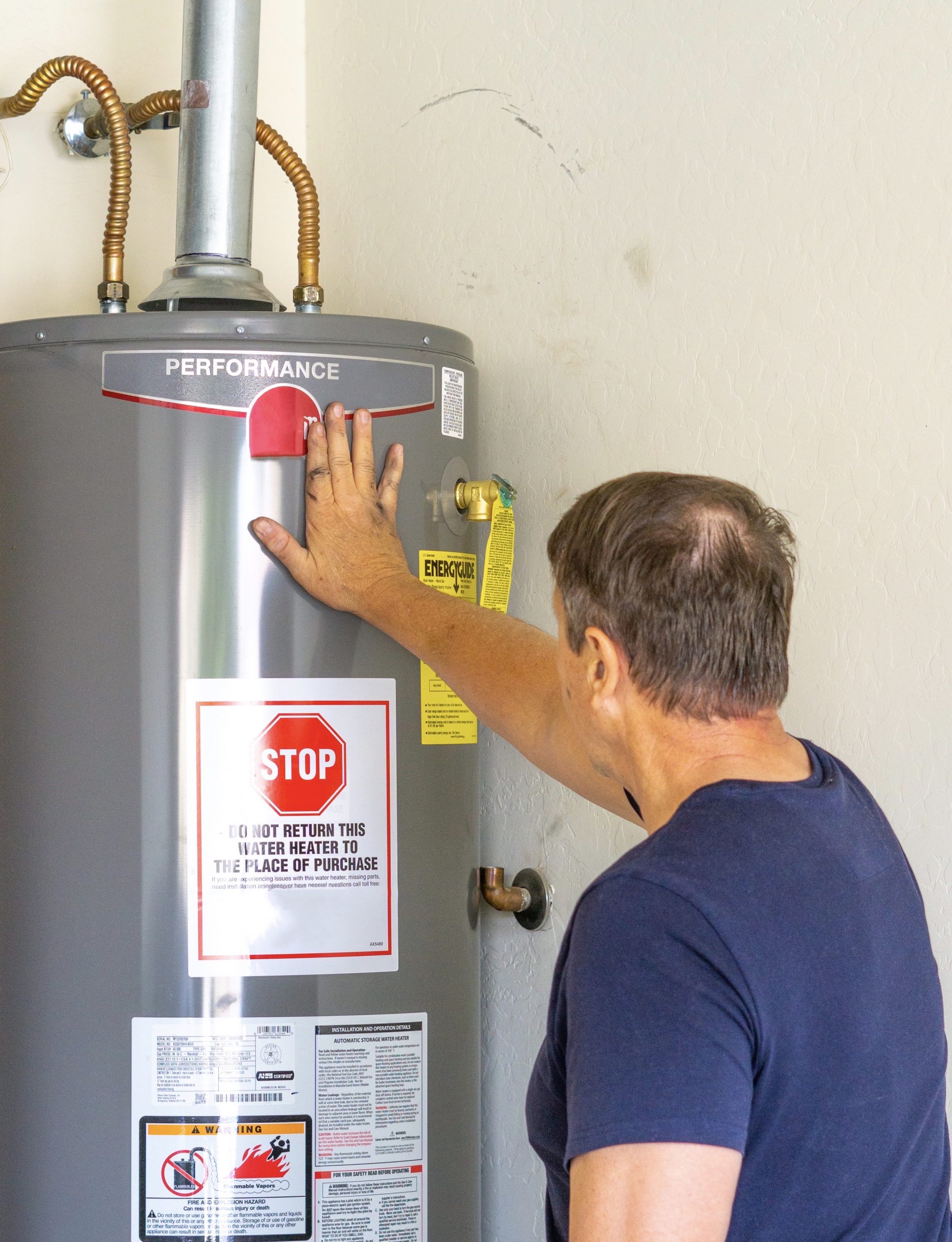
Preparing for water heater service in St. George does not mean troubleshooting the equipment yourself. It means making a safe, clear handoff: leave the system alone, note what can be seen without risk, and make it easier for a professional to reach the area. A few simple preparations can keep the appointment focused on the actual condition instead of on avoidable access obstacles.
Water heaters can involve hot water, pressure, fuel, electrical components, and tight installation spaces. That is why preparation should be limited to normal household tasks. Do not remove a panel, disconnect anything, drain the tank, adjust a valve, reset electrical equipment, alter gas equipment, or try to identify a repair before the visit.
Start with a safe route to the equipment
Look at the route a visitor would use to reach the water-heater area. If it can be done safely, move ordinary loose items such as boxes, laundry baskets, or stored belongings that block a walkway. The goal is a clear path, not a renovation of the space.
Leave anything attached to the water heater, piping, electrical equipment, venting, or drainage in place. Do not move shelving that appears built around the unit, pull the water heater away from a wall, or remove materials that may be part of the installation. If the location is cramped, simply describe that fact when scheduling.
For a garage, closet, utility room, or other common location, note any access limitations: locked gate, pets, stairs, a narrow doorway, or stored items nearby. That information helps St George Water Heaters plan for the visit without requiring a homeowner to change the equipment area.
Make a short record of the reason for the call
Service planning begins with the concern, not with an assumption about the answer. Write down when the issue began, what you noticed, and whether it affects hot water throughout the home or at one fixture. Useful observations include visible moisture, changed hot-water patterns, unfamiliar sounds, or a concern about a safely visible component.
Keep observations separate from diagnosis. "The shower was cooler after several uses" is more useful than "the heater has a failed part." The first statement tells the professional what happened. The second one can lead the conversation toward a conclusion that has not been verified.
If there is a condition that seems urgent, say so when requesting help. A gas odor, burning smell, smoke, water near electrical equipment, or active water spread is a safety boundary. Do not spend time clearing a route or taking photos if the area cannot be approached safely.
Collect only accessible information
If a manufacturer label is already in plain view, record the model, serial number, fuel type, and capacity. Do not remove covers, open panels, reach behind the equipment, or move it to find the label. A qualified professional can obtain any inaccessible information with the proper procedure.
The U.S. Department of Energy's water-heating overview explains general equipment categories and efficiency considerations. It does not establish the condition, setup, or service need of a specific St. George water heater. Use it as background, not as instructions for handling installed equipment.
It can also help to locate prior invoices, warranty paperwork, or manuals that are already stored in a safe place. These documents may show past service dates or model information. Do not delay a needed visit because paperwork is incomplete. The actual equipment and current condition matter more than a perfect file.
Keep children, pets, and routine traffic clear
On the appointment day, keep children and pets away from the work area. If a pet needs to be secured, make that plan before the technician arrives. This helps everyone move through the property safely and allows a clearer conversation about the concern.
Avoid doing a large load of laundry, running multiple showers, or starting other hot-water-heavy activities just to demonstrate the symptom. Normal use may provide useful context, but creating extra demand is not a test. Let the professional advise whether any observation during the visit is appropriate.
If someone else in the household has noticed the problem, consolidate those observations into one note. Different people may have seen the concern at different times, but a single timeline is easier to share and reduces the chance that important details are lost.
Know what preparation does not include
Preparing for water heater service is not a DIY maintenance project. Avoid actions that can introduce risk or alter evidence:
- Do not change temperature settings to see whether the concern changes.
- Do not reset breakers, open electrical covers, or touch wiring.
- Do not relight, adjust, or disconnect gas equipment.
- Do not flush, drain, or open the tank.
- Do not cap, plug, or modify a relief valve.
- Do not force an unfamiliar or damaged shutoff valve.
These limits are especially important when information online seems confident but lacks the details of your property. Water-heater service decisions depend on the specific system, installation, use history, and conditions found during evaluation.
Questions to have ready for the appointment
Before the visit, prepare a few practical questions. Ask what information is helpful, what may be inspected, and what options are supported by the findings. If a recommendation is made, ask what condition it addresses and what assumptions it depends on. This keeps the conversation transparent without demanding a promise before the equipment is evaluated.
You may also ask whether future maintenance records, model details, or operating observations would help. The answer can be property-specific. There is no universal checklist that replaces the manufacturer's guidance and an on-site professional assessment.
A calm, useful handoff in St. George
For water heater service in St. George, a clear route, safely visible records, and a factual description are enough. St George Water Heaters can assess the actual water-heater condition and explain the appropriate next steps. During editorial review, a contextual link to <a href="/services/water-heaters/">water-heater service</a> should be retained only after the current destination is confirmed.
The best preparation is deliberately modest: preserve the condition, avoid unsafe changes, and make the service conversation easier. That supports a property-specific decision without turning a homeowner into the person responsible for diagnosing the system.
If the equipment or its surroundings cannot be approached safely, say that plainly when scheduling. Safety information is more valuable than a more detailed but risky inspection.
Keep access details current but modest
If a route changes before the appointment, such as a gate being locked, a pet being present, or a hallway becoming blocked by normal household items, add that information to the service note. It can help the visit begin smoothly without requiring any changes to the water heater or its connections. A clear path means a path for a person to walk safely, not a space that has been rebuilt around the equipment.
When a professional arrives, point out the equipment area and share the facts you collected. Let the technician decide what needs to be moved, accessed, or inspected. This keeps responsibility for technical access with the qualified person and protects the household from making an assumption about piping, venting, electrical components, or the installed water heater.