



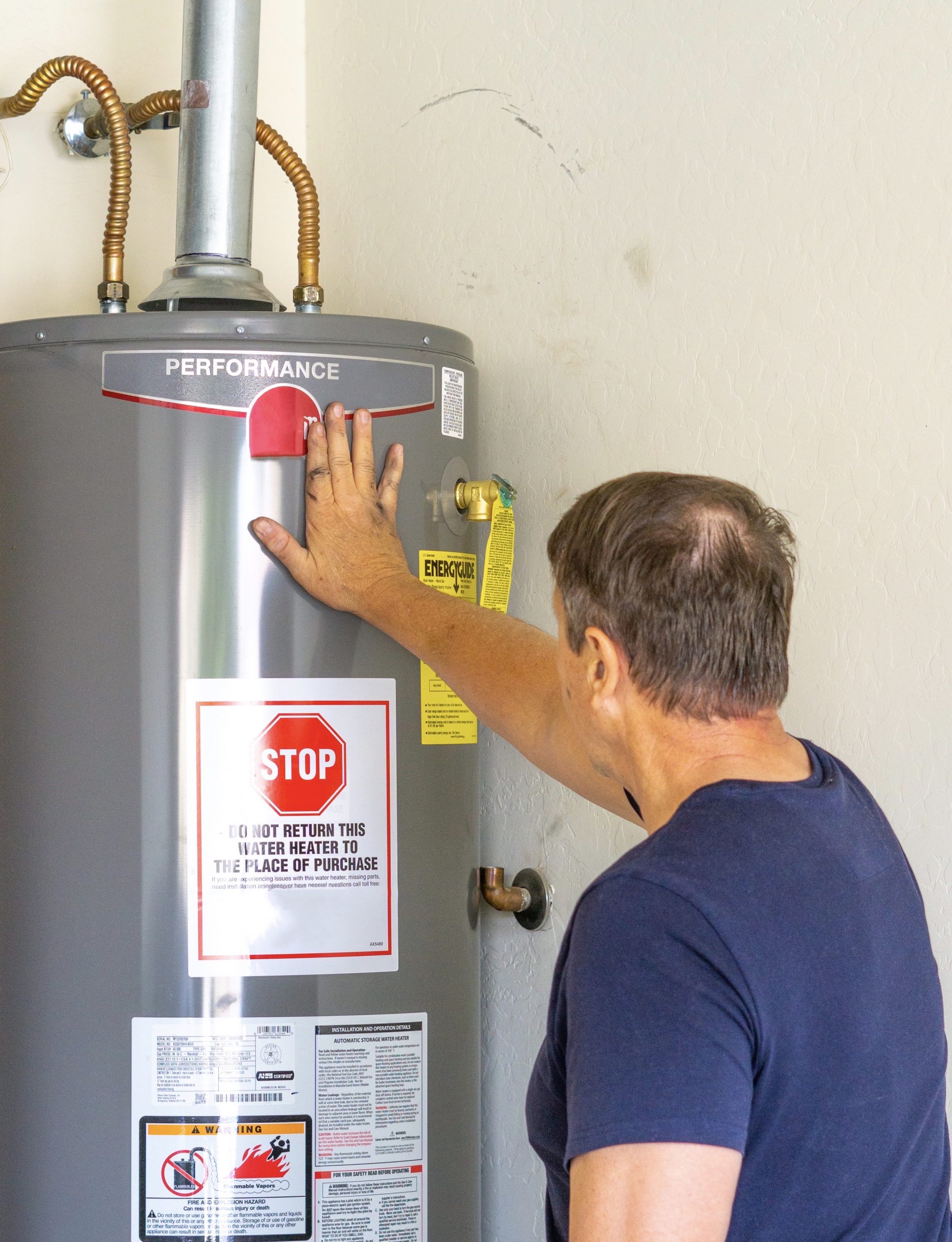
A useful water-heater service history helps a future St. George conversation start with facts rather than guesses. It can include existing invoices, manuals, safely visible equipment details, normal-use observations, and property-specific findings from past service. It should not become a do-it-yourself repair plan or a reason to handle equipment that is not safely accessible.
Water heaters can involve hot water, pressure, fuel, electrical components, controls, and installation-specific conditions. Do not open panels, reset breakers, adjust gas equipment, drain a tank, change settings, or modify valves to complete the history. A general record cannot determine the right repair, service interval, service scope, lifespan, or replacement decision for a particular home.
Begin with documents already in the home
Gather invoices, manuals, warranty paperwork, installation notes, and prior service reports from normal household files. Put them in one labeled folder or secure digital location. Add a date and a short description, such as "service visit," "manual," or "installation paperwork," so a later reader can understand what each document represents.
Missing paperwork is not proof that a water heater has a problem. It simply means part of the history is unknown. A qualified assessment can still begin with current observations and the safely accessible information that is available now.
If a prior invoice includes a model number or service date, keep that information with the document. Do not move equipment or remove covers to make every record match a data label. A professional can safely obtain inaccessible information when it is relevant.
Record visible equipment details safely
If a manufacturer label is already visible from a safe position, note the model number, serial number, fuel type, and capacity. Do not reach behind the unit, remove a cover, move it away from a wall, or access a concealed electrical label. An incomplete record collected safely is better than an exact record that creates a risk.
The Department of Energy's water-heating guidance provides general information about water-heating systems. It does not establish the condition, service need, or proper setting of a specific St. George installation. A label, equipment type, or earlier invoice is not enough to make a repair or replacement decision by itself.
Note the equipment location in simple terms: garage, closet, utility room, or another accessible area. Mention practical access limits such as stairs, a gate, pets, or stored items. These facts help plan a service visit without asking the household to alter the installation.
Keep normal-use observations separate from conclusions
When a concern appears, write down the date, approximate time, and what changed during normal use. You might note a changed hot-water pattern, a safely heard sound, visible moisture, or an unfamiliar odor. Use plain descriptions and do not assign a cause.
For example, write "hot water seemed different after normal morning use" rather than "a heating component failed." Write "moisture was visible near the equipment from a safe position" rather than "the tank leaked." Those observations can help a professional ask the right questions. The conclusions require evaluation of the actual equipment and property.
Include which fixtures or rooms were involved and whether the pattern was recurring, intermittent, or unchanged. Do not run extra showers, laundry, or dishwashing cycles to force a test. A short timeline from ordinary use is safer and more useful.
Keep safety conditions out of routine documentation
A gas odor, smoke, burning smell, water near electrical equipment, or active water spread is not a recordkeeping task. Step away and seek appropriate help. Do not stay to retrieve a manual, take a close photo, or find a hidden label.
If a detail cannot be safely observed, mark it as unknown. This is valuable information. It keeps a future reader from treating a missing fact as an answer or attempting equipment access to complete the file.
Do not treat a drain pan as a repair for active water and do not cap, plug, or modify a relief valve. Those components have property-specific roles. A service history should preserve what is known, not invite equipment changes.
Save professional findings with their evidence
After a visit, record the date, what was observed by the professional, and any property-specific guidance. Keep those findings separate from the household's earlier notes. This makes clear what was noticed first and what was later verified after direct evaluation.
Do not turn an earlier recommendation into a universal instruction for every later symptom. Conditions, equipment, access, and household use can change. A new concern should receive current assessment rather than an automatic response based on an old invoice or online article.
If the household receives a written explanation, keep it with the service date and original observation record. This creates a history that can support a future conversation without oversimplifying the equipment's condition.
Prepare a clear service conversation
When contacting St George Water Heaters, have the short timeline, accessible label information, prior invoices, and safe photos available. Lead with any immediate safety issue. Then explain what changed, when it was noticed, and what remains unknown.
Ask what should remain untouched before the visit and which records are useful. The answer should be tied to the St. George property, not to a promise about response time, service scope, outcome, or equipment lifespan. At editorial review, this post may link to <a href="/services/water-heaters/">water-heater service</a> only after the destination is confirmed live.
A practical next step in St. George
For water-heater service in St. George, a small factual history supports safer decisions. St George Water Heaters can assess the actual system and explain appropriate options. Until then, keep equipment untouched, retain the documents and normal-use facts already available, and let qualified evaluation guide the next step.
Keep unknowns visible
It is helpful to note what is not known: inaccessible label details, an uncertain service date, or a symptom that could not be observed safely. This prevents a later reader from filling gaps with assumptions. A qualified professional can address those questions using the appropriate access and evaluation.
Keep household actions in the record too
If a safety action was necessary, record it in plain language. For example, note that an unsafe area was avoided, that a known accessible household shutoff was used according to established instructions, or that the equipment was left untouched because access was uncertain. This gives a future service conversation important context without claiming that the action identified the cause.
Do not add actions that were not actually taken. An honest timeline is more valuable than a checklist recreated from memory. If an action is uncertain, leave it out or mark it as unknown. The professional can ask follow-up questions based on the equipment and property conditions.
Review the record before each new call
Before a new service conversation, put the most recent observation, prior invoices, accessible model information, and any safe photos together. Write a one-sentence summary of what changed and when it was first noticed. This makes it easier to share the relevant facts without treating the history as proof of a repair need.
If the current symptom is different from an earlier one, say that clearly. A previous sound, water pattern, or service recommendation may provide context, but it does not automatically explain a new condition. St George Water Heaters can determine what history is relevant once the actual system is available for evaluation.
Keep the household role appropriately limited
The record is a communication tool, not an assignment to inspect or maintain technical components. The household can retain documents, describe normal use, and make a safe route available. Opening equipment, touching wiring, changing settings, handling fuel, or modifying a valve belongs outside a general recordkeeping article.
This boundary protects the equipment and the people in the home. It also helps ensure that a service recommendation is based on direct evidence from the St. George property rather than on an assumption added while trying to make the history more complete.